
NFT collection · Draft 1.0
Notice
In development This paper describes software in development and is informational only. It is not an offer of securities, investment advice or a promise of profit. Holding a Stonk Intern does not confer equity, ownership of any entity or a guaranteed share of revenue; rewards depend on protocol activity and on the activation of the parent broker. Stock token features are unavailable in restricted regions; see the Use of Website terms. Figures on this page describe the tested contracts and can change before deployment.
Section 1
Abstract
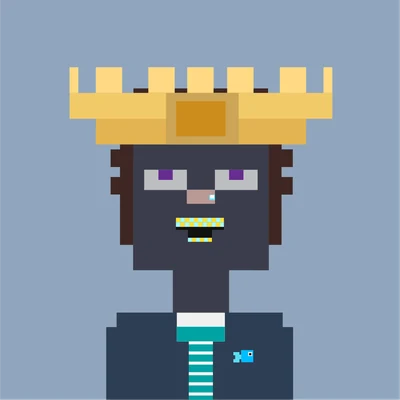
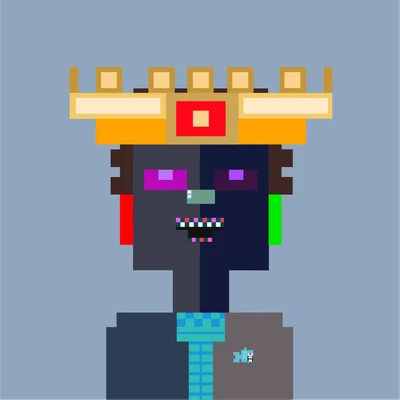
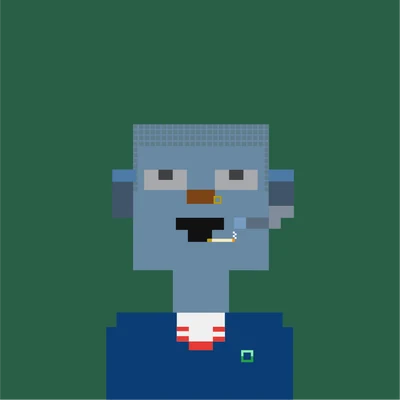
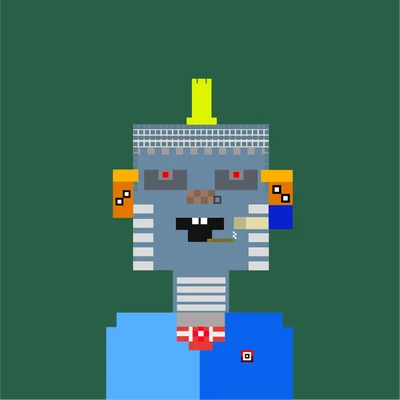
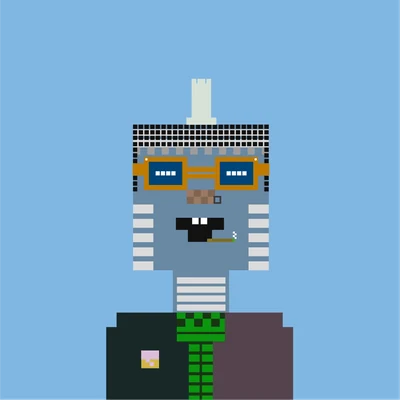
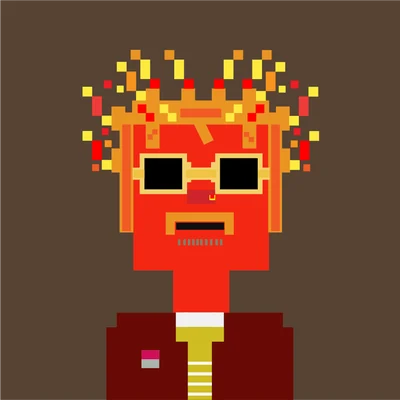
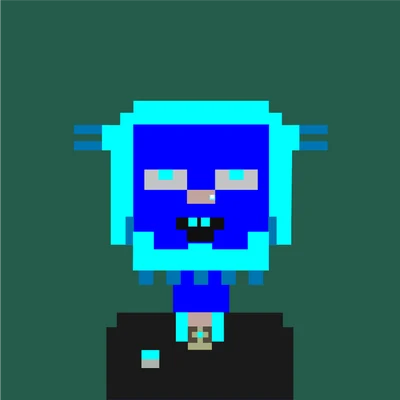
Stonk Interns is the companion collection to StonkBrokers: 8,888 pixel art interns, two for each of the 4,444 brokers, minted on Robinhood Chain as an ERC-721C collection with a token bound wallet attached to every intern. Each broker gets one intern of each class: the V1 intern is Sigma class and the V2 intern is Woke class.
The main goal of the interns is to grow the StonkBrokers ecosystem by giving new people an easier way in. A StonkBroker is a full seat on the floor. An intern is the desk next to it: lower cost, tied to a real broker, and paid from the same revenue rails, so a newcomer can learn how StockFi and DeFi work on Robinhood Chain by actually participating, not by reading about it.
Every intern earns a base pay as a slice of its parent broker's Clock In revenue, climbs a career ladder of job titles, and can carry an onchain name. Interns are freely tradeable assets: they sell on any allowlisted marketplace or on the Intern Exchange, and their traits update themselves onchain as their status changes, so a listing always shows the intern's current title and standing. Together these give a prospective StonkBroker a guided path from first mint to high level strategy, and give builders a second collection to integrate against.
Why interns exist
Mission
StonkBrokers proved the model: activated brokers elect the tokenized stocks and assets they want, protocol fees are swapped into those assets every round, and the rewards land in each broker's own token bound wallet. That loop is powerful, but 4,444 seats is a small club and the price of a seat rises with the success of the protocol.
Interns open the door wider without diluting the brokers. Each intern is anchored to one broker and only exists because that broker chose to create it. The broker decides how much of its revenue the intern receives, and the intern's job title reflects that choice for everyone to see. The result is a two tier ecosystem where brokers are the senior desks and interns are the pipeline of people learning to run one.
- Easier entry point. $20 in ETH plus 999 $STONKBROKER per intern during the first 24 hours, paid by the parent broker at mint; only the $STONKBROKER leg rises afterwards, by 999 a day up to a 9,999 ceiling. Interns then trade on the Intern Exchange at prices set by the market, giving newcomers a first position in the ecosystem well below the cost of a broker.
- Learn by doing. Interns use the same Clock In elections, the same token bound wallets, and the same tools as brokers. Picking a stock token menu, activating a tier, market making a pool, or locking liquidity is something an intern owner does, not something they watch.
- A path to the senior desk. The career ladder is designed to graduate people. An intern owner who has learned the floor is the natural next StonkBroker holder, and a broker owner who trains two good interns earns more from the same revenue.
- More to build on. A second collection, a second Clock In, an NFT exchange, the names marketplace for Robinhood Chain and the V2 lending desk, all run by the interns, are new surfaces for developers building within the StonkBrokers ecosystem.
Section 3
Who the interns are for
The collection is written for three groups. Each of them starts in the same place, an intern with a name and a wallet, and follows a different track.
- New traders. People who want to understand tokenized stocks, commodities and bitcoin on Robinhood Chain. The intern's Clock In elections are a live, low stakes introduction to building a portfolio out of protocol revenue instead of out of pocket.
- StockFi and DeFi power players in training. Holders who want to go deeper: liquidity provision with Smart LP Volatility Farming, locked liquidity and vesting in the Safety Deposit Box, token launches through Stonklauncher, and options trading and leverage strategies as the Leverage Machine powered by the STORMM engine arrives. The intern is the account you learn these on before you run them at broker scale.
- Builders. Developers who want to build within the StonkBrokers ecosystem. Open ABIs and integration guides, the Broker Tools explorer, the open source LAURA swarm, and the BUSL 1.1 licence with Additional Use Grants give builders a documented stack, and the intern gives them an onchain identity and wallet to build from.
Section 4
The collection
Stonk Interns is 8,888 tokens split into two classes. Intern #N is StonkBroker #N's V1 intern, the Sigma class, and intern #N + 4,444 is its V2 intern, the Woke class, so both the lineage and the class are visible in the token id itself. Every intern mirrors the traits of its parent broker: background, skin, outfit, hair, badge and accessories are the intern versions of the broker's own, drawn in that class's art style, so a broker and its two interns read as one team at a glance.
The 28 rarest brokers, ranked by trait rarity across the parent collection, receive paired one of one art (one V1 and one V2 each) in place of layered traits. That is 56 one of one interns in total.
The collection ships as an ERC-721C contract with a transfer validator, a 9.99% ERC-2981 creator royalty, and an ERC-6551 token bound wallet for every intern. Rewards are always paid into that wallet, never to a bare address, which is the same rule the parent collection follows.
Interns are freely tradeable. Once live, an intern is a standard ERC-721 asset that moves wallet to wallet, lists on any allowlisted marketplace, and trades against pooled liquidity on the Intern Exchange. Its metadata is rendered onchain from live state rather than from a static file: the job title, revenue share, parent broker status, and whether the intern is live or dormant are all traits that update themselves the moment the underlying state changes. A buyer never has to trust a listing; the token describes its own current standing.

Learning as a game loop
The career ladder
The intern career ladder is the learning path made explicit. It has two dimensions the owner controls and one the market controls.
The first dimension is base pay. The broker owner delegates each intern 0, 0.5, 1, 2 or 2.5 percent of that broker's Clock In revenue, at most 5 percent per broker across both interns. The slice sets the job title stored in the intern's metadata: Unpaid Intern, Junior Analyst, Analyst, Associate and Senior Associate. Titles only move up. A promotion costs a small ETH fee, a demotion is not possible, and the title stays with the intern when it changes hands. If the parent broker is not activated, the slice pauses and the title shows as furloughed until the broker is activated again, so an intern's base pay always depends on a working broker.
The second dimension is status. An intern is either dormant or live, and a live intern can be activated on its own ladder like a broker. Status is written into the intern's traits, so anyone looking at the token sees exactly where it stands.
The third dimension is the market. Interns are freely tradeable, on the Intern Exchange or any allowlisted marketplace, and the title and status travel with the token. A well titled intern under an active broker is worth more to its next owner, and because the traits update themselves onchain, the market prices what the intern actually is today.
Section 6
The training floor
Interns are not a separate product. They plug into every surface StonkBrokers already runs, and the site gains a Brokers / Interns switch so the same desks render the intern side with the same controls. This is what a new holder learns, in the order they usually learn it.
- Clock In. Elect up to three assets from the shared menu of tokenized stocks, tokenized commodities, bitcoin, $STONKBROKER and USDG, weighted by percentage. Each round the pool is swapped into those assets and credited to token bound wallets. An intern's base pay arrives through the same rounds as its parent broker's revenue, so the mechanics a new holder learns are identical to the broker's, at a lower entry price.
- Anvil AMM and the Intern Exchange. Buy and sell NFTs against pooled liquidity, or become the market maker yourself: deposit interns, $STONKBROKER, or both, set a buy price, a sell price and a step, and let the pool trade. This is the cleanest introduction to how automated markets, spreads and inventory work.
- Smart LP Volatility Farming. Single sided and paired vaults on Uniswap v3 stock token pools that compound fees automatically. An intern owner learns fee yield, price ranges and impermanent loss with real positions of any size.
- Safety Deposit Box. Permanent liquidity locks, cliffs and vesting schedules. Understanding why locked liquidity matters is the difference between a trader and a StockFi power player.
- Stonklauncher. Anti snipe token launches with guaranteed bonding into locked liquidity on Robinhood Chain and Arbitrum One. Builders launch here; traders learn to read a launch.
- Names on Robinhood Chain. The onchain name marketplace the interns run for the whole chain. Register a name for your wallet or your intern, list it, trade it. Naming is the first thing most new holders do and the simplest onchain market to understand.
- V2 lending. The lending desk the interns run for StonkBrokers and interns. Supply ETH or $STONKBROKER to earn, or borrow against a broker or a live intern. Collateral, loan to value and liquidation are learned here on assets the holder already owns.
- Leverage Machine, powered by STORMM. The options exchange in development: stock tokens as call liquidity, ETH as put liquidity, American style options minted as NFTs, leverage without liquidations. High level options and strategy education in the ecosystem lives here, and the intern is the account to learn it on.
Section 7
Mint process
Mint price: each intern costs $20 in ETH plus 999 $STONKBROKER during the first 24 hours. Both legs are paid to the treasury. The ETH leg is priced by the Chainlink ETH/USD feed at mint time and stays a flat $20 for the life of the mint. Only the $STONKBROKER leg moves, and only after the first 24 hours.
After the 24 hour public window closes, the $STONKBROKER leg rises by 999 $STONKBROKER every day: 1,998 on day 1, 2,997 on day 2, 3,996 on day 3, and so on, until it reaches the 9,999 $STONKBROKER ceiling on day 10, where it stays. Minting on the first day is therefore the cheapest it will ever be. The protocol owner can only lower the opening fee, the daily step or the ceiling, never raise them.
Only the parent can mint. To mint a broker's interns you must own that StonkBroker and it must be activated. You can mint one intern or both in a single transaction.
The mint runs in two phases so that the full 8,888 supply is visible on marketplaces after day one.
Public window. For the first 24 hours any activated broker owner can mint their interns for $20 in ETH plus 999 $STONKBROKER each. Interns minted in the window are live immediately: transferable, activatable, nameable.
Dormant sweep. After the window closes, a permissionless sweep mints every remaining intern into the token bound wallet of its parent broker as dormant. Dormant interns exist and show in the collection, but they cannot be moved, activated, named, traded on the Intern Exchange, or used as collateral.
Release. The activated broker owner pays the mint fee at any later date to release a dormant intern: the flat $20 in ETH plus the $STONKBROKER leg at that day's rung on the schedule above. Releasing early costs less than releasing late.
Assign and trade. Once live, the broker owner delegates the revenue slice and job title, can give the intern an onchain name, and is free to hold it, sell it on a marketplace, or place it in an Intern Exchange pool. The title and status go with it wherever it trades.
Section 8
The intern economy
Base pay comes from the parent broker. Beyond that, the interns run desks of their own for the whole of Robinhood Chain, and the fees those desks earn belong to the intern side of the ecosystem. Every intern desk pays into the Intern Clock In, the interns' own distribution round, so an activated intern participates in everything the interns operate.
Three desks are run by the interns at launch. Fee levels and schedules for each are published before the desk opens; this paper describes what the desks do, not the final numbers.
- Intern Clock In. The interns' own distribution round. Each intern's weight is its job title multiplied by its own activation tier. Interns elect from the same menu as brokers and payouts land in the intern's token bound wallet.
- Intern Exchange. An automated market for interns, run by the interns. Deposit $STONKBROKER, interns, or both into a pool, set a buy price, a sell price and a step, and the pool market makes on its own: every buy moves the price up one step, every sell moves it down. Pools are quoted in ETH or in $STONKBROKER. Browse it in an Anvil style vault view or a marketplace style grid.
- The names marketplace for Robinhood Chain. The interns operate the onchain name service for all of Robinhood Chain: anyone, intern holder or not, can register a name that resolves to a wallet, list it, and trade it, and the interns benefit from the fees the marketplace earns. An intern can carry a name of its own that travels with it when it is sold, and intern holders are the first users the service is built for.
- V2 lending for brokers and interns. The interns operate the V2 lending desk for StonkBrokers and interns. Liquidity providers supply ETH or $STONKBROKER, borrowers post a StonkBroker or a live intern as collateral, and liquidations honor the StonkBroker royalty. The interns earn the fees the desk generates, which is what ties the senior collection's borrowing activity back to the intern economy.
Section 9
Building within the ecosystem
StonkBrokers is an onchain incubator as much as it is a collection. Interns add a second, more accessible collection to build against, and the developer track is meant to turn intern owners into contributors.
- Documented contracts. Byte exported ABIs and integration guides for the launcher, Smart LP, the Safety Deposit Box and the Anvil AMM are published under Docs and the integration folder on this site. The intern stack ships with the same package at deployment.
- Broker Tools. The Robinhood Chain explorer and analytics surface at brokertools.info and stonkscan.io. Every transaction link on this site resolves there, and its token, wallet and contract pages are the reference for anyone indexing the ecosystem.
- LAURA. The open source swarm at laura.stonkbrokers.io shows how autonomous agents can research, grade and act on the ecosystem's public feeds. It is MIT licensed as a template for builders who want to run their own.
- Licence. Protocol contracts are released under the Business Source Licence 1.1 with Additional Use Grants for partner deployments, converting to MIT on the change date. Builders who want a production deployment ask for a grant; everyone can read, test and integrate.
- Identity. An intern is a wallet with a face and a name. Builders use it the way brokers already do: as the onchain identity that signs, receives and gets recognised across every StonkBrokers surface.
Section 10
Protocol guarantees
The intern contracts are written so that the important promises are enforced by code rather than by the team.
- Fees only go down. Mint fees, promotion fees and name fees can be lowered by the owner and never raised. The daily $STONKBROKER step on the mint fee is anchored on the moment the 24 hour public window closes.
- Shares only go up. An intern's revenue slice ratchets upward. Nobody, including the broker owner, can quietly cut a title once it has been granted.
- Rewards land in token bound wallets. Every payout is credited to the intern's ERC-6551 wallet. There is no path that pays a bare address.
- Dormant means dormant. Swept interns cannot be transferred, activated, named, traded or borrowed against until the activated broker owner pays the release fee.
- Compliant transfers. The ERC-721C transfer validator keeps marketplaces to an allowlist of known operators so the 9.99% royalty that funds the Intern Clock In cannot be routed around.
- No admin path to user funds. Owner levers are limited to fee caps, menu and listing management. Escrowed funds and credited rewards cannot be swept by the protocol.
Section 11
Status and roadmap
The full intern stack is built and tested end to end: the collection, transfer validator, activation manager, the Intern Clock In engine, the Intern Exchange, the names marketplace for Robinhood Chain and the V2 lending desk. Unit tests and a mainnet fork rehearsal against the live StonkBrokers contracts pass. Nothing is deployed yet.
Before deployment the collection art is finalised, a security audit report is published, the Clock In 3.0 migration path for existing broker elections is rehearsed a final time, and the launch sequence and contract addresses are announced on this site. Interns launch on Robinhood Chain first.
Publish the audit report and final contract addresses.
Open the 24 hour public mint window for activated broker owners.
Run the dormant sweep so the full 8,888 supply is visible.
Open the Intern Exchange and the Intern Clock In.
Open the names marketplace for Robinhood Chain and the V2 lending desk, both run by the interns, with fees and parameters published ahead of each.
Section 12
Glossary
- StockFi. Decentralized finance built on tokenized stocks and real world assets. On Robinhood Chain that means stock tokens issued by Robinhood, traded and used as collateral onchain.
- Clock In. The StonkBrokers distribution round. Protocol fees are swapped into the assets holders elected and credited to their token bound wallets, weighted by activation.
- Token bound wallet. An ERC-6551 smart wallet owned by an NFT. Whoever owns the NFT controls the wallet and everything in it.
- Activation. Paying a tier fee in $STONKBROKER so an NFT earns from Clock In. Higher tiers carry higher weight. Transferring the NFT clears its activation.
- Dormant intern. An intern minted into its parent broker's wallet after the public window that cannot be used until the release fee is paid.
- Intern Exchange. The automated market for interns where pools of $STONKBROKER and interns trade at prices that step with every buy and sell.
- Sigma class and Woke class. The two intern classes. Every broker's V1 intern (token id N) is Sigma class and its V2 intern (token id N + 4,444) is Woke class, each drawn in its own art style.
- Names marketplace. The onchain name service for Robinhood Chain operated by the interns, where names that resolve to wallets are registered, listed and traded.
- V2 lending. The lending desk operated by the interns where ETH or $STONKBROKER is lent against StonkBrokers and live interns as collateral.
© SB (BVI) Ltd. This document may be updated as the intern stack moves from tested contracts to a live deployment. Always verify contract addresses on this site and on a block explorer before relying on any summary.